If you have time to see only one sight in Seoul, make it Gyeongbokgung (Palace of Shining Happiness). With its splendid architecture, serene pagodas and mazelike grounds, Gyeongbokgung is the largest and most elegant of Seoul’s five royal palaces.
Inspired by the Hollywood Walk of Fame, a boulevard in glamorous Gangnam is dedicated entirely to K-Pop artists. But instead of stars embedded in the sidewalk, K-Star Road serves up a parade of GangnamDols, 3m-tall statues of cartoon bears decorated to represent a different K-Pop singer or band, including Super Junior, Girls’ Generation and BTS.
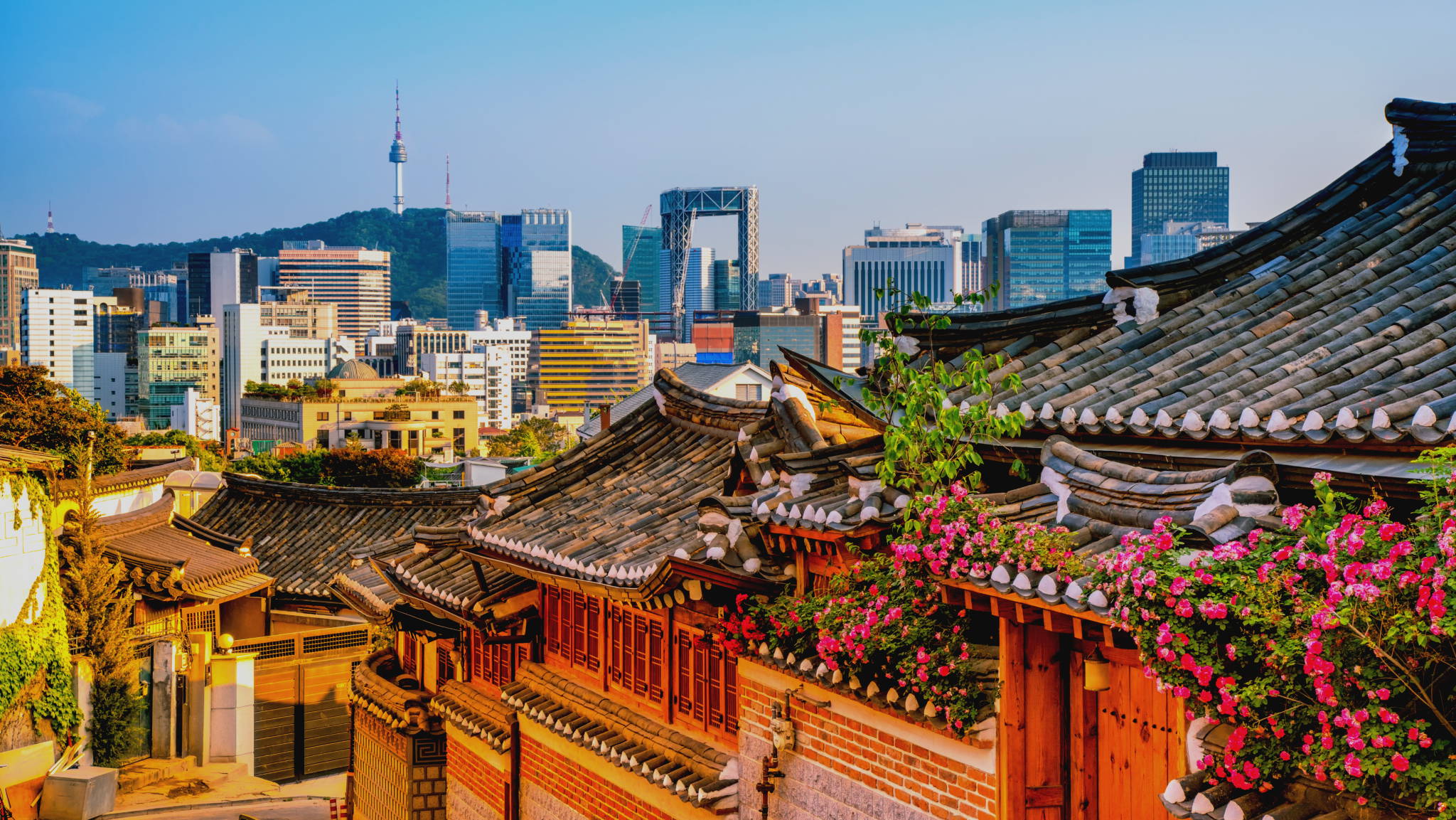
Hundreds of traditional Korean homes (hanok) make up Bukchon Hanok Village, a neighborhood that recaptures the atmosphere of Joseon-dynasty Korea. Although the authenticity of the neighborhood is often debated – some of the hanok are newly built while others are a century old – the verdict on the charm of the small alleyways and incredible views is unanimous.
Street food in Seoul is beloved for its spice, variety and affordability – and there’s no better place to try it than Gwangjang Market. Dating from the early 20th century, this covered market has gained a reputation for having some of the best Korean cuisine.
Bukhansan National Park is listed in Guinness World Records as “the most visited national park per unit area” – which is easy to understand, since it lies within Seoul’s city limits and is easily reachable by public transportation. You’ll often see athletic Koreans in colorful hiking gear riding the subway to this spot on weekends.
With more than 10,000 artifacts on display, the sprawling War Memorial of Korea contextualizes the military conflict that defined the fate of the Korean peninsula and brought a North–South divide. The history of the Korean War (1950–53) comes alive in a meticulously curated exhibition that includes documentary footage, war-related relics and replicas, and real military equipment like tanks, helicopters and weapons. While it isn’t necessarily an easy or fun visit, coming here is a must to understand Seoul and the Korean past and present better.
Working factories rub shoulders with repurposed warehouses that now host hip cafes, galleries and vintage stores. It’s slightly gritty, surprisingly industrial – and immensely exciting. Welcome to Seongsu-dong, one of Seoul’s best places for creatives and those looking to find a more relaxed atmosphere than in business-first downtown. The area embraces its nickname of “Brooklyn of Seoul,” as well as its rich shoemaking history (more than half of Korea’s shoemakers are currently based here). It’s also a great district for solo travelers.
Visually stunning from every angle, the curvaceous spaceship-looking complex was designed by the late Zaha Hadid and is straight out of your sci-fi fantasies. This is the one building in Seoul you must absolutely visit and it’s pretty easy to get to. Wander around its different levels to find galleries, event spaces, shops, museums and lawns that afford sleek views of this aluminum and concrete architectural gem.
Hongdae (Korean: 홍대) is a neighborhood in Mapo District, Seoul, South Korea, near Hongik University ("Hongik Daehakgyo" in Korean), after which it is named.[1] The neighborhood is known for its urban arts and indie music culture, local shops, clubs, cafés and entertainment. The area is located in Mapo District in the western end of Seoul, stretching from Seogyo-dong, Hapjeong-dong & Seogang-dong.